1st Inversion (chord degree)
Section outline
-
A chord is in root position if its root is the lowest note. For example, the root of a C-major triad is C, so a C-major triad will be in root position. In an inverted chord, the root is not the lowest note. The inversions are numbered in the order their lowest notes appear in a close root-position chord (from bottom to top). (Wikipedia)
C-major triad (or any chord with three notes) has root position and two inversions: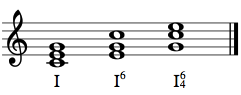
- In the first inversion, the lowest note is E – the third of the triad – with the fifth and the root stacked above it (the root now shifted an octave higher), forming the intervals of a minor third and a minor sixth above the inverted bass of E, respectively.
- In the second inversion, the lowest note is G – the fifth of the triad – with the root and the third above it (both again shifted an octave higher), forming a fourth and a sixth above the (inverted) bass of G, respectively. (Wikipedia)
The following C-major triads are all in the first inversion (third as bass):
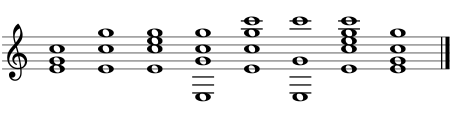
1. inversions of all triads in C major (sixth chords):
